Best Cekodok Pisang Malaysian Banana Donuts Recipe
The Most Addictive Cekodok Pisang (Malaysian Kuih Kodok Banana Donuts) Recipe You’ll Ever Make – Let me tell you about the time I nearly caused a neighborhood incident over banana donuts.

Cekodok Pisang (Malaysian Kuih Kodok Banana Donuts)

Ingredients
- 3 bananas (larger, and overripe )
- 1 ¼ cups all-purpose flour (170 grams)
- ¼ cup palm sugar
- ¼ teaspoon cinnamon
- ¼ teaspoon ground cloves
- ½ teaspoon baking soda
- ¼ teaspoon baking powder
- ¼ teaspoon salt
- Oil for frying ((canola oil, vegetable oil, peanut oil, or sunflower oil))
- ⅓ cup palm sugar
- ½ teaspoon vanilla extract
- ½ cup water
Instructions
- In a mixing bowl, mash the overripe bananas until smooth.
- Gradually add all-purpose flour, palm sugar, cinnamon, ground cloves, baking soda, baking powder, and salt, mixing until the batter is thick.
- Heat oil in a frying pan over medium heat; canola, vegetable, peanut, or sunflower oil all work. If using a frying thermometer or a deep fryer, bring the oil to 350–355°F (177–179°C).
- When the oil is hot, carefully drop spoonfuls of batter into it. Use two spoons—one to scoop and another to push—to form neat balls.
- Fry for about 3 minutes, until the cekodok pisang are golden-brown.
- Lift the fried fritters from the oil and place them on a wire rack to drain excess oil.
- If desired, bring palm sugar, vanilla, and water to a boil over a medium flame to make a syrup for drizzling onto the banana donuts.
Nutrition
It was a sweltering Saturday afternoon, and I had three bananas sitting on my counter that had crossed the line from “perfectly ripe” to “fruit fly magnet.”
You know the ones—black spots everywhere, soft to the touch, and giving off that intensely sweet aroma that makes you feel slightly guilty about your produce management skills.
My usual banana bread routine felt too predictable, too safe.
That’s when my Malaysian friend Mei texted me a photo of these gorgeous, golden-brown spheres of joy with the caption: “Cekodok pisang—childhood in a bite!
I stared at that photo for a solid five minutes.
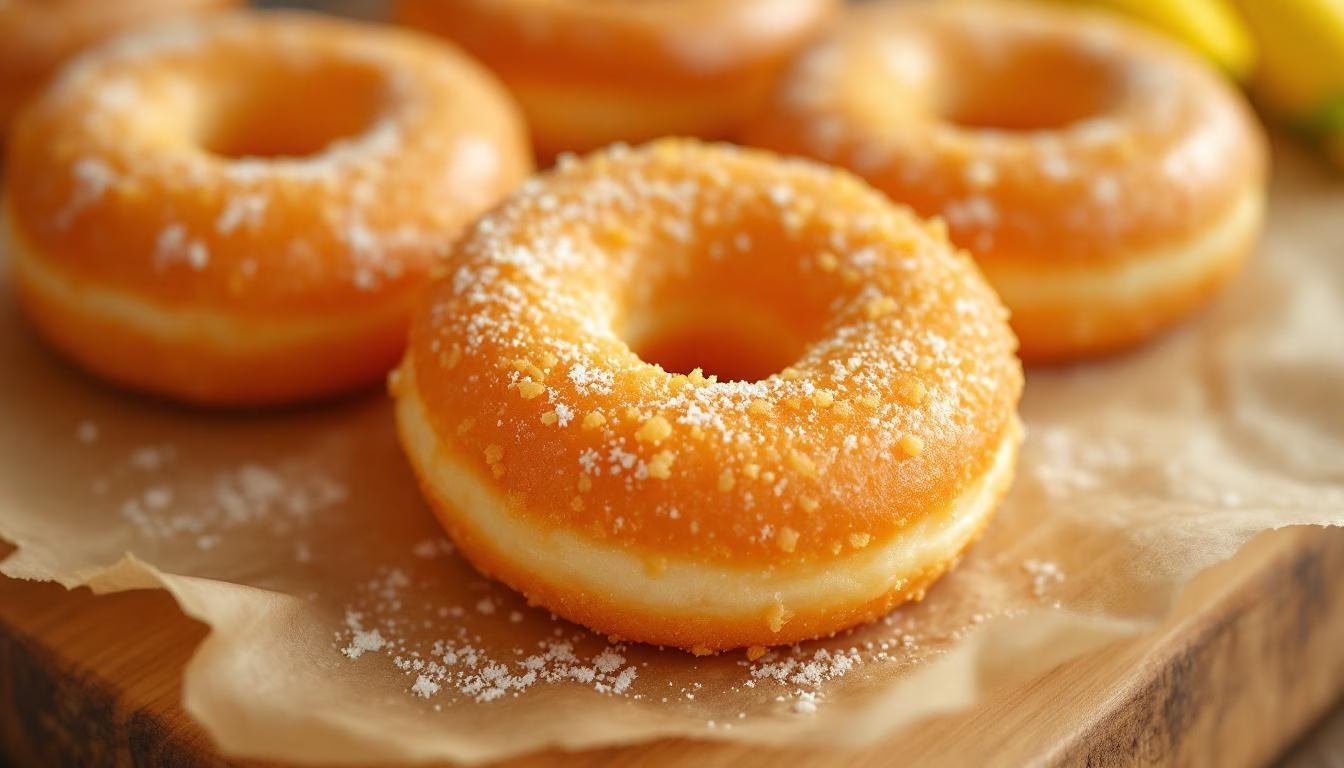
These weren’t your typical American-style banana fritters; they looked like tiny, perfectly imperfect clouds that had been kissed by the deep fryer gods.
The exterior was gorgeously craggy and golden, promising that satisfying crunch, while you could practically see the tender, banana-sweet interior begging to be devoured.
Within an hour, I was elbow-deep in batter, my kitchen smelling like a Malaysian street food stall, and my neighbors were mysteriously appearing at my door with increasingly creative excuses.
“Oh, I just needed to borrow some… uh… air?” became the running joke.
The truth was, the aroma of these Cekodok Pisang (Malaysian Kuih Kodok Banana Donuts) had traveled three houses down, and apparently, resistance was futile.
Authentic Malaysian Kuih Kodok Banana Donuts Recipe
Cekodok Pisang, also known as Kuih Kodok, represents everything beautiful about Malaysian street food culture—it’s humble, accessible, and absolutely bursting with flavor.
These aren’t just banana fritters; they’re little parcels of comfort that have been perfecting themselves in Malaysian kitchens and street stalls for generations.
The magic lies in the simplicity and the technique.
Unlike Western-style banana fritters that often rely on heavy batters or complicated preparations, this Cekodok Pisang recipe celebrates the natural sweetness and moisture of overripe bananas.
The batter is intentionally thick and chunky, creating those wonderfully irregular surfaces that crisp up beautifully in hot oil.
Palm sugar adds a deep, molasses-like sweetness that white sugar simply can’t replicate, while warm spices like cinnamon and cloves provide that signature Southeast Asian warmth.
The result?
A crispy exterior that gives way to an incredibly tender, almost custard-like center that tastes like concentrated banana happiness.
These bite-sized beauties are traditionally enjoyed warm, often with a drizzle of palm sugar syrup, making them the perfect afternoon snack or dessert that bridges the gap between street food and home comfort.
Essential Ingredients for Perfect Cekodok Pisang
The beauty of this Cekodok Pisang (Malaysian Kuih Kodok Banana Donuts) recipe lies in its short ingredient list, but each component plays a crucial role in creating that perfect texture and flavor balance.
The Star Players
Overripe Bananas: This is non-negotiable—you want bananas that are almost embarrassingly soft, with black spots covering most of the peel.
These provide natural sweetness, moisture, and that intense banana flavor that makes these donuts sing.
Under-ripe bananas will give you dense, flavorless results.
Palm Sugar: If you can find it, palm sugar is worth seeking out.
It has a complex, caramel-like flavor with hints of smokiness that regular sugar can’t match.
Look for it in Asian grocery stores, usually sold in solid blocks or granulated form.
Warm Spices: Cinnamon and ground cloves provide that signature Malaysian warmth.
Don’t skip these—they transform simple banana fritters into something exotic and memorable.
The Supporting Cast
All-Purpose Flour: Creates the structure for our batter.
Too much and your donuts become dense; too little and they’ll fall apart in the oil.
Leavening Agents: Both baking soda and baking powder work together to create lift and lightness, ensuring your donuts aren’t dense hockey pucks.
Neutral Oil: Canola, vegetable, peanut, or sunflower oil all work beautifully for frying.
Avoid olive oil—its flavor is too assertive and its smoke point too low.
Step-by-Step Instructions for Cekodok Pisang Success
Making this Cekodok Pisang recipe is surprisingly straightforward, but attention to detail makes the difference between good and absolutely irresistible.
Preparing the Batter
Start by mashing your overripe bananas in a mixing bowl until smooth—or mostly smooth.
I like to leave a few small lumps for texture, but you don’t want huge chunks that will create uneven cooking.
The bananas should mash easily with just a fork; if you’re struggling, they’re not ripe enough.
Gradually add your dry ingredients: all-purpose flour, palm sugar, cinnamon, ground cloves, baking soda, baking powder, and salt.
The key word here is “gradually”—dump everything in at once and you’ll end up with a lumpy mess.
Mix until the batter is thick and cohesive.
It should hold together when scooped but not be so thick that it’s difficult to work with.
Getting the Oil Temperature Right
Heat your oil in a heavy-bottomed pan or deep fryer to 350-355°F (177-179°C).
This temperature range is crucial—too hot and your donuts will brown before cooking through; too cool and they’ll absorb oil and become greasy.
If you don’t have a thermometer, test with a small drop of batter.
It should sizzle immediately and rise to the surface within a few seconds.
The Frying Technique
Here’s where technique really matters.
Use two spoons—one to scoop the batter and another to push it off into the oil.
This creates those beautifully irregular shapes that are part of Cekodok Pisang’s charm.
Don’t overcrowd the pan; fry in batches to maintain oil temperature.
Fry for about 3 minutes, turning once if needed, until they’re golden-brown all over.
They should sound hollow when tapped and float freely in the oil.
Lift them out with a slotted spoon and drain on a wire rack—never paper towels, which will make the bottoms soggy.
Pro Tips for Cekodok Pisang Perfection
After making this recipe countless times (and eating far too many for quality control purposes), I’ve learned a few tricks that make all the difference.
Temperature Control is Everything
Invest in a good thermometer if you don’t have one.
Consistent oil temperature is the difference between crispy, light donuts and greasy disappointments.
If your oil gets too hot, remove the pan from heat for a minute to cool down.
The Two-Spoon Method
This isn’t just for neat presentation—it actually affects texture.
Using two spoons creates more surface area, which means more crispy bits.
Resist the urge to make them perfectly round; embrace the rustic, irregular shapes.
Timing is Crucial
These are best served warm, within 30 minutes of frying.
They’ll still be good later, but that magical contrast between crispy exterior and tender interior is at its peak when fresh.
Don’t Skip the Syrup
The optional palm sugar syrup isn’t really optional in my book.
Bring ⅓ cup palm sugar, ½ teaspoon vanilla extract, and ½ cup water to a boil, then simmer until slightly thickened.
This adds another layer of sweetness and helps keep the donuts moist.
Creative Variations and Substitutions
While traditional Cekodok Pisang is perfect as-is, there’s room for creativity once you’ve mastered the basic technique.
Flavor Variations
Coconut Version: Replace ¼ cup of flour with unsweetened shredded coconut for tropical flair.
Chocolate Chip: Fold in ⅓ cup mini chocolate chips for a fusion twist that kids absolutely love.
Spice Blend: Experiment with cardamom, nutmeg, or even a tiny pinch of black pepper for complexity.
Pandan: If you can find pandan extract, a few drops will give you that gorgeous green color and unique flavor beloved in Southeast Asian desserts.
Ingredient Substitutions
Palm Sugar Alternatives: Brown sugar works in a pinch, though you’ll lose some complexity.
Coconut sugar is another good option.
Flour Options: A mix of all-purpose and rice flour (¾ cup all-purpose, ½ cup rice flour) creates an even crispier texture.
Dairy-Free: This recipe is naturally dairy-free, making it perfect for those with lactose sensitivities.
Gluten-Free: Substitute with a 1:1 gluten-free flour blend, though the texture will be slightly different.
Troubleshooting Common Issues
Even with the best intentions, things can go sideways.
Here’s how to fix the most common Cekodok Pisang problems.
Dense, Heavy Donuts
This usually means your bananas weren’t ripe enough, you used too much flour, or your leavening agents were old.
Fresh baking powder and baking soda are crucial—replace them every six months.
Greasy Results
Your oil temperature was too low, or you didn’t drain them properly.
Always use a wire rack for draining, and check your oil temperature frequently.
Falling Apart in Oil
Batter too wet or oil too hot.
Add a bit more flour to thicken the batter, and lower your oil temperature slightly.
Uneven Browning
Oil temperature fluctuations or overcrowded pan.
Fry in smaller batches and maintain consistent heat.
What to Expect: Realistic Results and Final Thoughts
Let’s be honest about what you’re getting into with this Cekodok Pisang (Malaysian Kuih Kodok Banana Donuts) recipe.
These aren’t going to look like perfectly uniform bakery donuts, and that’s exactly the point.
They’re rustic, homestyle, and absolutely delicious in their imperfection.
Your first batch might not be picture-perfect, and that’s completely normal.
The batter takes a bit of getting used to—it’s thicker than you might expect, and the shapes will be wonderfully irregular.
Don’t worry if some are larger than others or if they don’t all brown at exactly the same rate.
This is street food at its finest, where character trumps uniformity every time.
The texture you’re aiming for is crispy and slightly craggy on the outside, with a tender, almost custardy interior that tastes intensely of banana and warm spices.
They should be light enough that you can easily eat three or four (trust me, you will), but substantial enough to feel satisfying.
The palm sugar adds a deep, complex sweetness that builds as you eat.
These Cekodok Pisang will disappear faster than you can make them—I’ve never had leftovers, though I’m told they keep for a day or two in an airtight container.
Reheat them briefly in a 350°F oven to restore some crispness.
But honestly, the magic is in eating them warm, preferably with a cup of strong coffee or tea, while standing in your kitchen and marveling at how something so simple can be so incredibly satisfying.