Mandazi Recipe – Easy Kenyan Fried Bread with Cardamom
The Best Mandazi Recipe (From My Kenyan Roommate’s Mom) – Mandazi is a lightly sweet, cardamom-spiced fried bread eaten across East Africa — Kenya, Tanzania, and Uganda — and it is one of the most satisfying breakfast recipes you can make at home.

Home-made Mandazi

Ingredients
- 750g self-raising flour
- 6 tablespoons sugar
- 2 eggs
- 1 cup milk
Instructions
- Mix the flour, cinnamon and sugar in a suitable bowl.
- In a separate bowl whisk the egg into the milk.
- Make a well at the centre of the flour and add the milk and egg mixture and slowly mix to form a dough.
- Knead the dough for 3-4 minutes or until it stops sticking to the sides of the bowl and you have a smooth surface.
- Cover the dough with a damp cloth and allow to rest for 15 minutes.
- Roll the dough on a lightly floured surface into a 1cm thick piece.
- Using a sharp small knife, cut the dough into the desired size setting aside ready for deep frying.
- Heat your oil in a suitable pot and gently dip the mandazi pieces to cook until light brown on the first side then turn to cook on the second side.
- Serve them warm or cold.
Nutrition
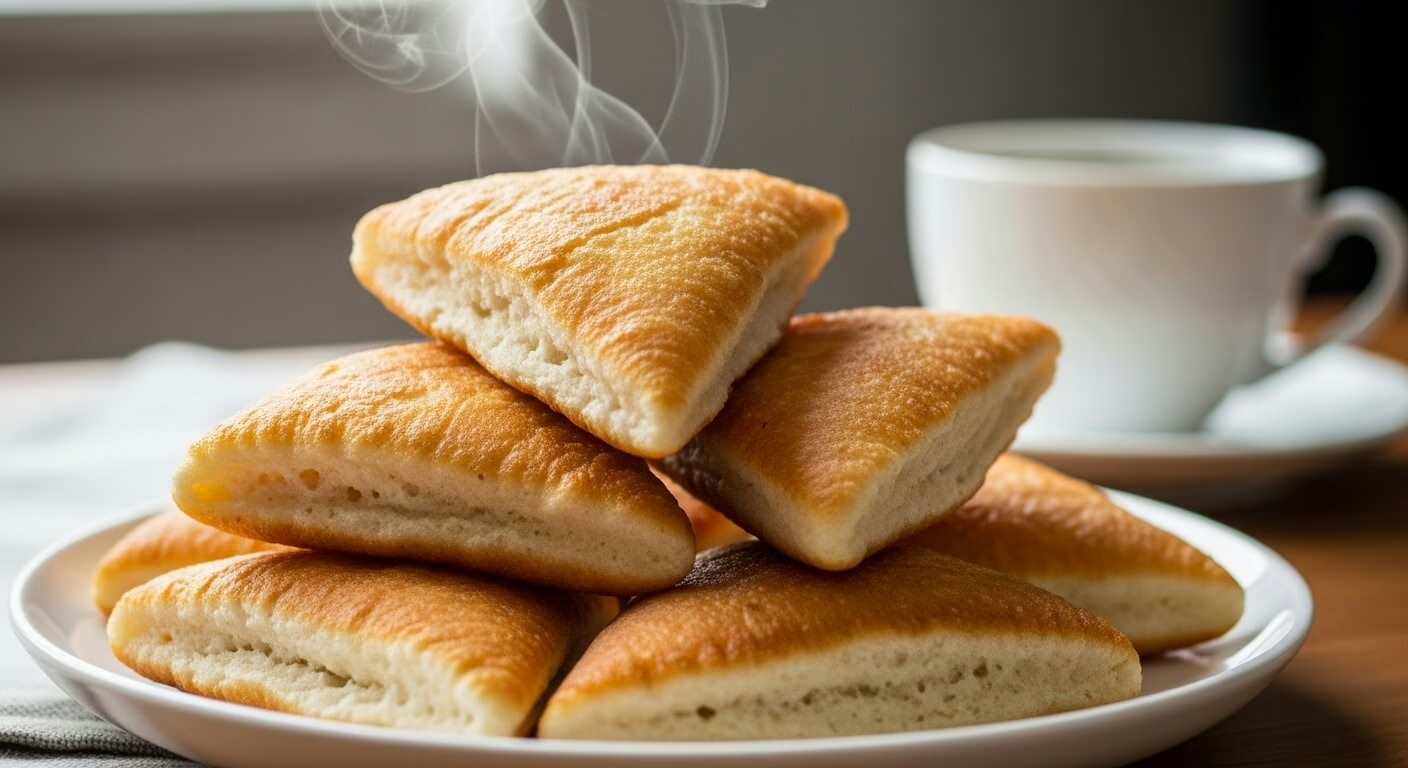
Golden and crispy on the outside, soft and pillowy inside, these triangular fried dough pieces sit somewhere between a donut and a bread roll, but they are entirely their own thing.
This mandazi recipe uses simple pantry ingredients: self-raising flour, eggs, milk (or coconut milk), sugar, and warm spices. No special equipment is needed — just a mixing bowl, a rolling pin, and a deep pot for frying. The whole process takes about an hour, including a 15-minute dough rest that makes all the difference.
Serve them warm with chai, coffee, or honey. They keep well for 2–3 days and reheat beautifully in the oven at 350°F / 175°C for 5 minutes.
What Is Mandazi?
Mandazi is a traditional East African fried bread made from a lightly sweetened, spiced dough.
It is a staple breakfast and snack food across Kenya, Tanzania, Uganda, and the wider Swahili Coast region.
Unlike American donuts, mandazi is less sweet and has a denser, more bread-like crumb.
The signature flavour comes from cardamom — sometimes cinnamon — which gives each piece a warm, subtly floral note.
They are shaped into triangles or rectangles rather than rings, and they puff gently during frying without becoming hollow.
You will find mandazi served alongside chai at roadside stalls, packed into school lunchboxes, and made fresh every weekend in home kitchens across East Africa.
They are also sometimes called “maandazi” or “African donuts,” though the latter undersells how distinctive they really are.
Ingredients
For the Dough:
- 500g (4 cups) self-raising flour, plus extra for dusting
- 4–6 tablespoons caster sugar (adjust to taste)
- 1 teaspoon ground cinnamon
- ½ teaspoon ground cardamom
- 2 large eggs
- 150–180ml (⅔ cup) whole milk or full-fat coconut milk
- Pinch of salt
For Frying:
- 750ml–1 litre (3–4 cups) neutral oil (vegetable or canola)
Optional for Serving:
- Honey, butter, or powdered sugar
- Chai or strong black coffee
Tip: Self-raising flour already contains baking powder and salt, so it gives you consistently fluffy mandazi without extra measuring. If you only have all-purpose flour, add 2 teaspoons of baking powder and a pinch of salt per 500g.
Can I Use Coconut Milk Instead of Regular Milk?
Yes — coconut milk is a traditional and widely used variation that adds a subtle richness and a very faint sweetness to the dough. Use full-fat canned coconut milk for the best result.
You can also use a 50/50 mix of coconut milk and whole milk if you want a lighter flavour. Both versions produce soft, fluffy mandazi. Regular whole milk works perfectly well if coconut milk is not available — avoid skimmed milk, as the lower fat content can make the dough slightly tougher.
Equipment You’ll Need
- Large mixing bowl
- Wooden spoon or dough scraper
- Rolling pin
- Sharp knife or pizza cutter
- Deep heavy-bottomed pot or deep skillet
- Slotted spoon or spider strainer
- Wire rack or plate lined with kitchen paper
- Cooking thermometer (recommended but not essential)
Instructions
Mixing the Dough
- Combine the self-raising flour, sugar, cinnamon, cardamom, and salt in a large bowl. Whisk briefly to distribute the spices evenly.
- In a separate bowl or jug, beat the eggs and milk together until fully combined.
- Make a well in the centre of the flour mixture. Pour in the egg and milk mixture and stir from the centre outward with a wooden spoon until a shaggy dough forms.
- Once the dough is too thick to stir, turn it out onto a lightly floured surface and knead for 3–4 minutes until smooth and no longer sticky. Avoid adding too much extra flour — a slightly tacky dough produces softer mandazi.
Resting the Dough
- Shape the dough into a ball and place it back in the bowl. Cover with a damp kitchen towel and rest for 15 minutes at room temperature. Do not skip this step — resting relaxes the gluten and makes the dough significantly easier to roll.
Rolling and Cutting
- Lightly flour your work surface. Divide the dough into two portions for easier handling.
- Roll each portion to approximately 1cm (⅜ inch) thick — roughly the thickness of your little finger. Too thin produces crispy, hard mandazi; too thick means the inside may not cook through before the outside browns.
- Cut into triangles or rectangles, each roughly 6–7cm (2½ inches) across. To make triangles, roll the dough into a rough circle and cut into wedges like a pizza. Each piece will puff slightly during frying but will not expand dramatically.
Frying
- Pour neutral oil into a deep heavy-bottomed pot to a depth of at least 5–6cm (2–2½ inches). Heat over medium heat to 170–180°C (340–355°F). If you do not have a thermometer, drop a small piece of dough into the oil — it should sizzle steadily and rise to the surface within 3–4 seconds.
- Fry in small batches of 3–4 pieces. Do not overcrowd the pot, as this drops the oil temperature and leads to greasy mandazi.
- Fry for 2–3 minutes per side, turning once, until deep golden brown on both sides. Adjust the heat as needed — if they brown in under 90 seconds, the oil is too hot.
- Remove with a slotted spoon and drain on a wire rack or kitchen paper. Serve warm.
Tips for the Best Mandazi
Do not skip the rest. The 15-minute dough rest is the single most impactful step. Skipping it makes the dough springy and difficult to roll, and the finished mandazi will be tougher.
Control your oil temperature. Medium heat is the right setting. If your mandazi brown in under 2 minutes, lower the heat. If they look pale and feel heavy with oil, raise it slightly. You will calibrate naturally after the first batch.
Roll to a consistent thickness. Uneven rolling means some pieces cook faster than others. Take an extra minute to roll evenly — it is worth it.
Use a heavy pot. A cast-iron pot or thick-bottomed Dutch oven holds heat more steadily than a thin pan, which means more consistent frying temperatures throughout the batch.
Season your spices to taste. The cardamom and cinnamon quantities here are a starting point. Some families use only cardamom, some add a pinch of nutmeg or powdered ginger. Keep the spicing subtle — it should be a background warmth, not the dominant flavour.
How Do I Know When the Oil Is the Right Temperature?
The correct frying temperature for mandazi is 170–180°C (340–355°F). At this temperature, a piece of dough dropped into the oil will sizzle immediately, sink briefly, then rise to the surface within 3–4 seconds.
If the dough sinks and stays on the bottom, the oil is too cold. If it browns within 60–90 seconds, the oil is too hot. A cooking thermometer gives you the most reliable reading, but the dough-drop test works well once you have done it a couple of times.
Vegan Version
Mandazi can be made vegan with two straightforward swaps. Replace the eggs with 2 tablespoons of ground flaxseed mixed with 6 tablespoons of water (let it sit for 5 minutes to gel). Use full-fat coconut milk in place of dairy milk.
The texture is very slightly denser than the egg version, but the flavour is excellent — the coconut milk actually enhances the spice notes. This version is also naturally dairy-free.
If you enjoy coconut-based recipes, our Indonesian sweet steamed bread recipe uses a similar coconut-forward dough technique and is worth exploring.
Can I Make Mandazi Ahead of Time?
Yes — mandazi keep well for 2–3 days stored in an airtight container at room temperature. To reheat, place them on a baking tray and warm in the oven at 175°C / 350°F for 5 minutes. They crisp back up nicely and taste almost freshly made.
You can also prepare the dough up to 24 hours ahead. After kneading, wrap it tightly in cling film and refrigerate. Bring it back to room temperature for 20 minutes before rolling and frying. Do not refrigerate already-fried mandazi — they become soggy.
What to Serve with Mandazi
Mandazi are most traditionally served with chai — strong, spiced East African tea brewed with milk. The slight sweetness of the bread and the bold warmth of the tea are a classic pairing.
They also work beautifully with black coffee, honey, or a smear of butter. For a more substantial breakfast, serve them alongside a bean stew or scrambled eggs. Some families eat them with fresh fruit or use them as a base for a breakfast sandwich.
If you enjoy exploring global fried snacks and breads, our crispy Indonesian vegetable fritters and crispy fried bananas are both excellent companions to a weekend frying session. For something sweet and coconut-based from a different tradition, the Martabak Manis Indonesian pancakes are worth a look.
Troubleshooting: Why Did My Mandazi Turn Out Wrong?
Too dense or heavy: You likely added too much flour during kneading, or the oil temperature was too low. Use a light hand with extra flour and check your oil temperature before frying.
Greasy and oily: The oil was not hot enough. Cold oil means the dough absorbs fat before a crust can form. Always bring the oil to temperature before adding the first piece.
Burnt outside, raw inside: The oil was too hot. Reduce the heat and fry at a lower temperature for longer — 2–3 minutes per side at 170–180°C is the target.
Dough too sticky to roll: It needs more resting time, or the dough is slightly warm. Cover and rest for a further 10 minutes, or refrigerate for 15 minutes.
Flat and not puffed: The dough was rolled too thin, or the self-raising flour was old and had lost its leavening power. Check the expiry date on your flour.
Does Mandazi Freeze Well?
Yes — mandazi freeze well for up to 2 months. Allow them to cool completely, then freeze in a single layer on a tray for 1 hour before transferring to a freezer bag. This prevents them from sticking together.
To reheat from frozen, place on a baking tray and warm in the oven at 175°C / 350°F for 8–10 minutes. Do not microwave from frozen — the texture becomes rubbery. Freshly fried mandazi have the best texture, but frozen ones are a very convenient option for batch cooking.
Frequently Asked Questions (FAQs)
What type of flour is best for mandazi?
Self-raising flour is the easiest and most reliable choice. It already contains leavening agents, giving you consistently fluffy results. If you only have all-purpose (plain) flour, add 2 teaspoons of baking powder per 500g and a pinch of salt.
How thick should I roll mandazi dough?
Roll the dough to approximately 1cm (⅜ inch) thick — about the width of your little finger. Thinner than this produces hard, crispy pieces; thicker than this risks an undercooked centre.
Can I bake mandazi instead of frying them?
Baking produces a very different result — more like a bread roll than fried dough. Mandazi is defined by its fried texture: crispy exterior, soft interior. If you want to avoid deep-frying, an air fryer at 180°C / 355°F for 10–12 minutes is a closer approximation, though the exterior will not be as golden or crispy.
Why do my mandazi not puff up?
The most common reasons are dough rolled too thin, old self-raising flour that has lost its leavening power, or oil that is too hot (causing the outside to set before the inside can expand). Check your flour’s expiry date and aim for 1cm thickness.
How much sugar should I use?
Use 4 tablespoons for a mildly sweet, versatile mandazi that works with both sweet and savoury accompaniments. Use 6 tablespoons for a noticeably sweeter version closer to a dessert doughnut. Traditional mandazi leans toward the lower end.
Can I add yeast to mandazi dough?
Some recipes use a small amount of instant yeast (about 1 teaspoon) in addition to the self-raising flour for extra lift and a slightly more complex flavour. If using yeast, allow the dough to rest for 30–45 minutes rather than 15. The texture will be slightly more airy and bread-like.
What oil is best for frying mandazi?
Use a neutral oil with a high smoke point: vegetable oil, canola oil, or sunflower oil are all ideal. Avoid olive oil (too low a smoke point and too strong a flavour) and coconut oil (it can impart a strong flavour and has a lower smoke point than refined vegetable oils).
Can I make smaller or larger mandazi?
Yes — size is flexible. Smaller pieces (4–5cm across) fry faster, in about 90 seconds per side, and are great for serving as a snack or with tea. Larger pieces (8–9cm) need 3–4 minutes per side. Adjust frying time accordingly and always check that the inside is fully cooked by breaking one open before finishing the batch.