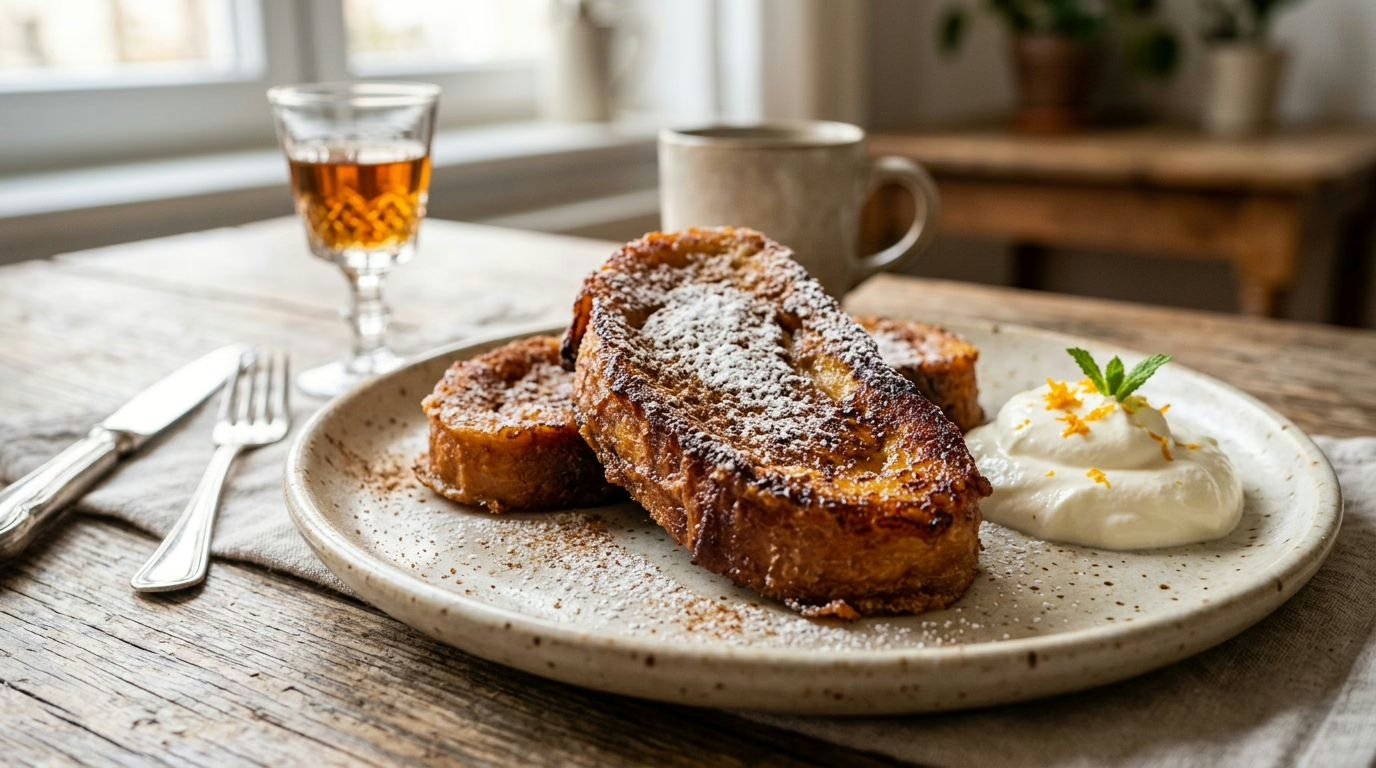
Torrijas with Sherry Recipe (Spanish French Toast)
Torrijas with Sherry Recipe (Spanish French Toast) – Torrijas with sherry are Spain’s answer to French toast—thick bread soaked in a sweet sherry custard, fried until golden and crispy, then dusted with powdered sugar.
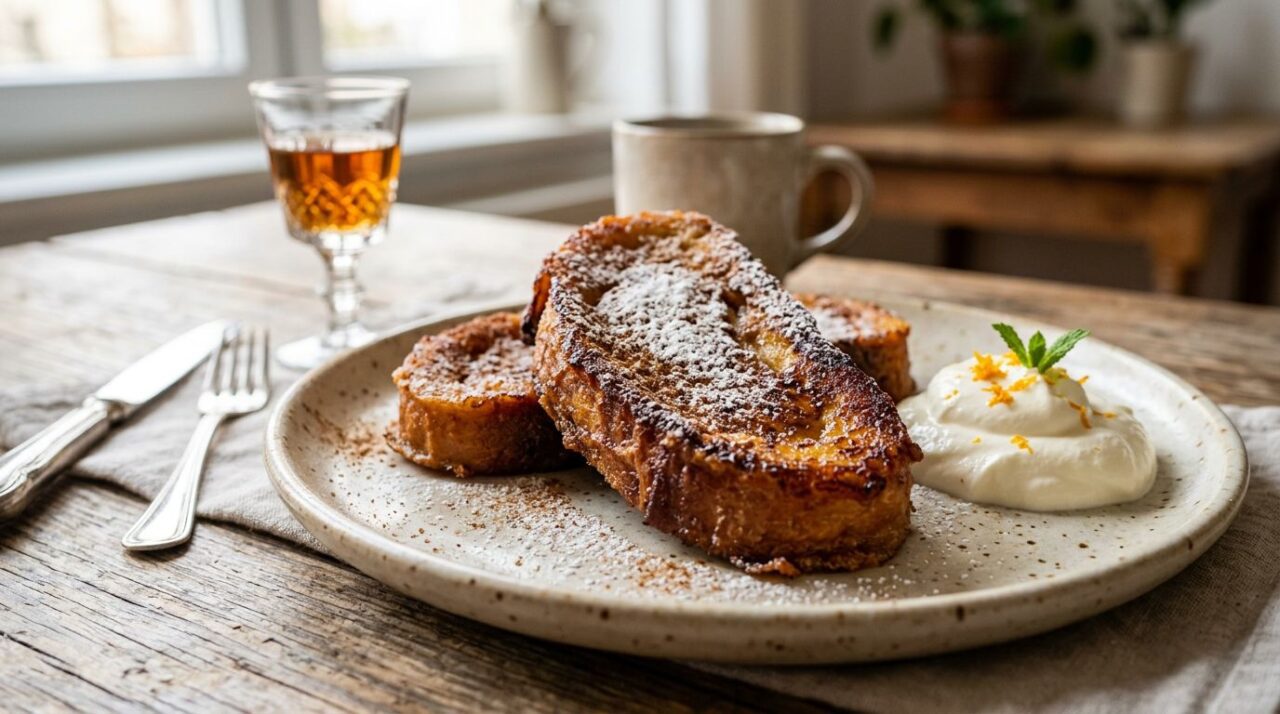
Torrijas with Sherry

Ingredients
- 2 medium Egg
- 2 tbsp Double Cream
- 2 tblsp Milk
- 3 tsp Golden Caster Sugar
- 3 tablespoons Sweet Sherry
- 4 thick slices Bread
- For frying Olive Oil
- To serve Icing Sugar
- To serve Creme Fraiche
Instructions
- In a wide, shallow bowl, beat the eggs with the cream, milk, golden caster sugar and sherry. Cut each slice of bread in two and dip them into the egg mix, turning to make sure they get a good coating on either side. Soak bread in egg mixture for 10 mins to absorb the liquid (carefully turn them over from time to time and make sure they don't get too soggy).
- Heat 1½ tbsp olive oil in a large frying pan and cook the bread for about 3 mins on each side until dark golden and crisp on the edge. Keep the slices warm in a low oven as you cook the rest.
- Divide the torrijas between plates and dust with the icing sugar. Serve with crème fraîche or Greek yogurt on the side.
Nutrition
This traditional Spanish dessert takes 30 minutes to make, serves 4, and transforms day-old bread into something extraordinary with just six ingredients.
I discovered torrijas scrolling through food videos late one night and immediately knew I had to try them.
The idea of soaking bread in sherry-spiked custard and frying it to crispy perfection sounded too good to pass up.
My first attempt was a soggy disaster—the bread fell apart in the pan, I used way too much oil, and my apartment smelled like burnt sugar and cooking wine for two days.
But even that failed version tasted incredible enough that I kept trying until I got it right.
Now I keep a bottle of sweet sherry in my cabinet specifically for weekend breakfasts.
These torrijas look fancy enough to serve at brunch but require no special skills—just organized chaos with six ingredients and a bit of patience.
What Are Torrijas?
Torrijas are a traditional Spanish dessert made from bread soaked in sweetened milk or custard, then fried until golden.
They’re typically served during Semana Santa (Holy Week) throughout Spain, though many families make them year-round as a way to use up stale bread.
The sherry version adds depth and subtle caramel notes without tasting boozy—the alcohol cooks off during frying, leaving behind complex sweetness.
This makes torrijas more sophisticated than typical French toast or pancakes, with a crispy exterior and custardy center that regular breakfast dishes can’t match.
Spanish home cooks have been making torrijas for centuries, and every region has its own variation.
Some soak the bread in milk first, others use wine instead of sherry, and many add cinnamon or lemon zest.
- Easy Ugali Recipe – Kenyan Cornmeal (2 Ingredients)
- The Humble Breakfast Potato Recipe: My Morning Salvation
- Rømmegrøt Recipe – Norwegian Sour Cream Porridge
- Yemeni Lahsa Recipe: Shakshuka’s Cooler Cousin
- Bake Once, Breakfast All Week: My Favorite Egg Muffin Cups Recipe
- Mandazi Recipe – Easy Kenyan Fried Bread with Cardamom
This recipe keeps things simple while delivering maximum flavor.
Ingredients You’ll Need to Make Torrijas with Sherry
This torrijas with sherry recipe requires just six core ingredients, most of which you probably have in your kitchen already.
The measurements below serve 4 people and take about 30 minutes from start to finish.
For the Custard:
- 3 large eggs
- 2 tablespoons double cream (or heavy cream)
- 100ml whole milk
- 2 tablespoons golden caster sugar
- 3 tablespoons sweet sherry (Pedro Ximénez or cream sherry)
For Cooking and Serving:
- 4 thick slices day-old bread (baguette or sourdough), cut in half
- 3-4 tablespoons olive oil for frying
- Icing sugar for dusting
- Crème fraîche or Greek yogurt for serving
What Type of Sherry Should I Use?
Sweet sherry works best for torrijas—specifically Pedro Ximénez or cream sherry.
These varieties are naturally sweet and syrupy, adding caramel-like depth without harsh alcohol notes.
You can find them at most liquor stores for $12-15, and one bottle lasts for months since you only use a few tablespoons per batch.
Dry sherry doesn’t work as well because it lacks the sweetness that balances the egg custard.
If you can’t find sweet sherry, mix dry sherry with an extra tablespoon of sugar, or substitute Marsala wine.
For an alcohol-free version, use apple juice with a splash of vanilla extract—not traditional, but it works.
Can I Use Fresh Bread Instead of Day-Old?
Day-old bread works significantly better than fresh bread for torrijas. Slightly stale bread has a firmer structure that absorbs the custard evenly without falling apart during soaking or frying.
Fresh bread is too soft and tends to disintegrate when saturated with liquid.
If you only have fresh bread, toast it lightly first or let slices sit out uncovered for 3-4 hours. You can also dry them in a 200°F (95°C) oven for 10 minutes.
Thick-cut baguette, sourdough, or challah all work beautifully—just avoid pre-sliced sandwich bread, which turns to mush too easily.
Equipment You’ll Need
You don’t need any special equipment to make torrijas with sherry. A wide, shallow bowl (like a pasta bowl or pie dish) works best for soaking the bread—you need enough room to dip slices without overlapping.
A large frying pan or skillet is essential for even cooking. Non-stick makes flipping easier, but cast iron gives better caramelization.
You’ll also need a spatula for turning the torrijas and a small sieve for dusting powdered sugar at the end.
Instructions
Making the Custard Base
Crack the eggs into a wide, shallow bowl and beat them lightly with a fork. Add the double cream, milk, golden caster sugar, and sweet sherry, whisking until everything combines into a smooth custard.
The mixture should smell strongly of sherry at this point—don’t worry, the alcohol flavor mellows completely during cooking.
The custard should be thin enough to coat the bread easily but thick enough to cling. If it looks too thick, add another tablespoon of milk.
If it’s too thin, whisk in another egg yolk.
Soaking the Bread
Cut your bread slices in half so you have 8 pieces total. This makes them easier to handle and ensures even cooking.
Dip each piece into the egg mixture, making sure both sides get thoroughly coated.
Let the bread soak for 10 minutes, turning the pieces over every few minutes. This timing is critical—too short and the centers stay dry, too long and the bread falls apart.
The slices should feel heavy and saturated but still hold their shape when you lift them with a spatula.
You’ll know they’re ready when pressing gently with your finger leaves an indent that slowly springs back. The bread should feel spongy but not like it’s about to collapse.
Frying to Golden Perfection
Heat 1½ tablespoons of olive oil in a large frying pan over medium heat. The oil should shimmer but not smoke—if it starts smoking, reduce the heat immediately.
Medium heat is crucial for torrijas; too hot and the outside burns before the inside cooks through, too cool and they absorb oil and turn greasy.
Carefully transfer 2-3 soaked bread pieces to the pan using a spatula, leaving space between them. Don’t overcrowd the pan or they’ll steam instead of fry.
Cook for 3 minutes on the first side without moving them—this allows a proper crust to form.
Flip carefully with a spatula and cook for another 3 minutes on the second side until dark golden brown and crispy on the edges. The first side always looks better than the second—that’s normal.
Transfer finished torrijas to a plate and keep warm in a 200°F (95°C) oven while you cook the remaining batches.
Add another 1½ tablespoons of oil to the pan between batches. You’ll use about 3-4 tablespoons total for all 8 pieces.
How Do I Know When They’re Done?
Torrijas are ready when both sides are dark golden brown with crispy, slightly lacy edges. The exterior should feel firm when you press it gently, while the center remains soft and custardy.
If you cut one open, the inside should look set but still moist—not raw or eggy.
If the outside browns too quickly before the inside cooks through, reduce your heat slightly. If they’re taking longer than 3 minutes per side to brown, increase the heat a bit.
Every stove is different, so adjust as needed.
Serving Your Torrijas
Divide the warm torrijas between plates immediately—they’re best served fresh from the pan while the exterior is still crispy. Dust generously with icing sugar using a small sieve or spoon.
The powdered sugar adds a professional touch and extra sweetness that completes the dish.
Serve with a dollop of crème fraîche on the side. The tangy creaminess cuts through the richness perfectly.
Greek yogurt works just as well and makes the dish feel slightly lighter. Sour cream also works but has a sharper tang.
Fresh berries make a nice addition when you’re feeling ambitious, or simply serve with black coffee. Two to three pieces per person is usually the right amount—these are rich enough that you don’t need a huge portion.
Can I Make These Ahead of Time?
You can prepare torrijas up to 2 hours ahead by soaking the bread in custard, covering the dish, and refrigerating until ready to cook.
This works great for brunch when you don’t want to be soaking bread while guests wait.
Just bring the soaked bread to room temperature for 10 minutes before frying.
However, torrijas don’t reheat well—the crispy exterior turns soggy in the microwave or oven. Always fry them just before serving for the best texture.
If you have leftovers, eat them cold as a snack rather than trying to reheat them.
Tips for Perfect Torrijas Every Time
Use day-old bread without exception. Fresh bread is too soft and absorbs custard unevenly, leading to soggy centers and torn edges.
If you only have fresh bread, dry it out first using one of the methods mentioned earlier.
Don’t skip the sugar in the custard mixture. I tried making these with just the sherry’s natural sweetness once, and they tasted oddly savory.
The sugar helps with caramelization and balances the eggy flavor.
Oil temperature matters more than you think. Test it by dropping a tiny bit of egg mixture into the pan—if it sizzles gently, you’re ready.
If it sits there doing nothing, the oil is too cool. If it spatters violently, it’s too hot.
The icing sugar isn’t technically optional, but dusting the finished torrijas with powdered sugar right before serving adds a professional-looking touch that takes five seconds and makes you look like you know what you’re doing.
What to Serve with Torrijas
Torrijas pair beautifully with strong black coffee or café con leche for an authentic Spanish breakfast experience. The bitter coffee balances the sweet, rich torrijas perfectly.
Hot chocolate is another traditional pairing, especially during Semana Santa.
For a more substantial brunch, serve torrijas alongside fresh fruit salad or berries. The bright acidity cuts through the richness.
You could also serve them after a light meal as dessert—they’re sweet enough to end a meal but not as heavy as traditional pies or cheesecakes.
Common Mistakes to Avoid
The biggest mistake is not soaking the bread long enough. Ten minutes feels like forever when you’re hungry, but rushing this step leaves you with dry centers.
Set a timer and be patient.
Another common error is overcrowding the pan. When bread pieces touch, they steam instead of fry, and you lose that crispy exterior.
Cook in batches even if it takes longer.
Flipping too early is tempting, but resist the urge to peek. Let each side cook for the full 3 minutes before turning.
Moving the torrijas around prevents proper browning and can cause them to break apart.
Using the wrong bread thickness is also problematic. Slices thinner than ¾ inch (2cm) cook too quickly and dry out.
Slices thicker than 1½ inches (4cm) don’t cook through properly. Aim for 1-inch (2.5cm) thick slices.
Variations to Try
For a citrus version, add the zest of one orange or lemon to the custard mixture. This brightens the flavor and adds aromatic complexity.
Some Spanish regions traditionally include cinnamon—add ½ teaspoon ground cinnamon to the custard for a warming spice note.
You can also make torrijas with red wine instead of sherry for a deeper, more robust flavor. Use a sweet red wine and reduce the sugar slightly.
Honey torrijas are another variation—replace the sugar with 2 tablespoons of honey in the custard.
For a richer version, use all cream instead of the milk-cream combination. This creates an incredibly decadent custard that’s perfect for special occasions.
Just be warned—it’s very rich, so smaller portions are advisable.
Storing Leftovers
Store leftover torrijas in an airtight container in the refrigerator for up to 2 days.
The crispy exterior will soften, but they still taste good eaten cold or at room temperature.
Don’t try to reheat them in the microwave—they’ll turn rubbery.
If you must reheat, use a 350°F (175°C) oven for 5-7 minutes to crisp them up slightly, though they’ll never be quite as good as fresh.
Honestly, leftover torrijas make a decent snack eaten straight from the fridge with your morning coffee.
You can freeze uncooked soaked bread for up to 1 month. Arrange pieces on a parchment-lined baking sheet, freeze until solid, then transfer to a freezer bag.
Fry directly from frozen, adding 1-2 minutes to the cooking time per side.
Why Torrijas with Sherry Recipe Works
This torrijas with sherry recipe works because it respects the traditional technique while keeping things simple enough for home cooks.
The 10-minute soak ensures the custard penetrates all the way through without making the bread fall apart.
Medium heat and adequate oil create that perfect crispy-custardy contrast.
The sweet sherry adds complexity that regular French toast lacks—subtle caramel notes and depth that make these feel special without requiring special skills.
Using day-old bread isn’t just traditional; it’s functional, giving you the structure needed to handle the long soak and high-heat frying.
This is accessible comfort food that happens to look impressive. You’re not tempering chocolate or making complex pastries—you’re soaking bread in boozy custard and frying it.
The technique is straightforward, the ingredients are simple, and the results are consistently delicious once you nail the timing.
Frequently Asked Questions (FAQs)
Can I use a different type of alcohol?
Yes, you can substitute Marsala wine, sweet Madeira, or even brandy for the sherry. Each brings a slightly different flavor profile—Marsala is nuttier, brandy is more intense.
For a non-alcoholic version, use apple juice with ½ teaspoon vanilla extract.
Why did my torrijas fall apart in the pan?
This usually happens when the bread soaks too long or when you use fresh bread that’s too soft. Stick to the 10-minute soak time and always use day-old or lightly toasted bread.
Also, make sure your oil is hot enough—bread cooked in cool oil absorbs too much liquid and falls apart.
Can I bake these instead of frying?
You can bake torrijas at 400°F (200°C) for 15-20 minutes, flipping halfway through, but you won’t get the same crispy exterior that makes fried torrijas special. Brush the soaked bread with melted butter before baking for better browning.
What's the difference between torrijas and French toast?
Torrijas traditionally use day-old bread soaked longer in a less sweet custard, often flavored with wine or sherry. French toast typically uses fresh bread, a sweeter egg mixture, and a shorter soak.
Torrijas are also fried in more oil, creating a crispier exterior.
How do I prevent the torrijas from being too oily?
Make sure your oil is hot enough before adding the bread—test with a drop of custard that should sizzle immediately. Don’t use too much oil (1½ tablespoons per batch is enough), and drain finished torrijas on paper towels if they seem greasy.
Can I make torrijas with gluten-free bread?
Yes, thick-cut gluten-free bread works, though it may need a slightly shorter soak time (7-8 minutes) as it can be more delicate. Choose a sturdy gluten-free bread rather than a soft sandwich variety.
What if I don't have double cream?
Heavy cream, whipping cream, or even half-and-half all work fine. The ratio of cream to milk just affects richness—more cream makes them more decadent, more milk makes them lighter.
Both versions taste great.
Are torrijas served warm or cold?
Torrijas are best served warm, immediately after frying, when the exterior is still crispy. However, they’re also eaten at room temperature in Spain, especially during festivals when they’re made in large batches.
Cold torrijas from the fridge make a decent snack, though the texture changes.